Kelpie Guide: An In-Depth Exploration
Delve into the captivating world of the kelpie‚ a shape-shifting spirit from Scottish folklore. This guide explores its origins‚ characteristics‚ and enduring presence in modern culture.
What is a Kelpie?
The kelpie‚ often called a water kelpie‚ is a fascinating and often dangerous mythical creature deeply rooted in Scottish folklore. Described as a shape-shifting spirit‚ it primarily inhabits lochs and rivers‚ though legends extend to meres and streams in Germanic mythology as well. Essentially a water horse‚ the kelpie’s core characteristic is its ability to transform‚ most commonly appearing as a magnificent horse.
However‚ this is a deceptive guise. Kelpies are known to lure unsuspecting individuals – often children or young women – to watery graves. They can also adopt human form‚ typically appearing as a strikingly handsome man. A telltale sign of a kelpie in human form is said to be the retention of its hooves.
The creature’s presence is widespread throughout Scotland‚ with nearly every significant body of water boasting its own kelpie tale. It serves as a potent cautionary figure‚ embodying the dangers hidden within seemingly tranquil waters.
Origins and Etymology
The etymology of the word “kelpie” remains somewhat uncertain‚ though scholars suggest a possible derivation from the Scottish Gaelic terms calpa or cailpeach‚ meaning “heifer” or “colt.” This connection hints at the creature’s initial association with horses. The earliest recorded use of the term‚ spelled “kaelpie‚” appears in a manuscript penned by William Collins‚ a poet‚ sometime before 1759.
This manuscript was later reproduced in the 1788 edition of his works. Records from 1674 in Scotland mention “Kelpie hoall” and “Kelpie hooll‚” indicating the creature was recognized and named centuries ago. The origins of the kelpie narrative itself are unclear‚ but likely stem from practical needs.
These needs included warning children about the perils of dangerous waters and cautioning young women against trusting attractive strangers. The kelpie’s story evolved over time‚ becoming a deeply ingrained part of Scottish cultural heritage.
Historical Mentions and Early Records
Almost every significant body of water in Scotland boasts an associated kelpie story‚ demonstrating the creature’s widespread presence in local lore. The most frequently recounted tales center around Loch Lomond‚ solidifying its reputation as a kelpie hotspot. However‚ mentions extend beyond Scotland‚ with similar water spirits appearing in Germanic‚ Irish‚ and Scandinavian folklore under different names.
Early records‚ like the 1674 burgh records from Scotland‚ already document the kelpie‚ showcasing its long-standing recognition. The 18th-century writings of William Collins provided one of the first written accounts‚ further cementing the kelpie’s place in literary tradition. These early mentions often served as cautionary tales‚ warning of the dangers lurking in lochs and rivers.
The consistency of these narratives across centuries suggests a deeply rooted cultural belief in the kelpie’s existence and power.
Kelpie Characteristics & Appearance
Kelpies are renowned for their shape-shifting abilities‚ most commonly appearing as magnificent horses. However‚ they can also assume human form‚ often retaining telltale equine features.
Shape-Shifting Abilities
The kelpie’s most defining trait is its remarkable ability to shapeshift. While predominantly known as a water horse‚ this mythical creature isn’t limited to a single form. Legends detail its capacity to transform‚ most frequently adopting the guise of a stunningly beautiful horse – often grey or white – to lure unsuspecting victims.
However‚ the kelpie’s transformations aren’t solely equine. It can also assume human form‚ typically appearing as an attractive man. This human guise is often used to entice individuals‚ particularly young women‚ closer to the water’s edge. A crucial detail often mentioned in folklore is that even in human form‚ the kelpie frequently retains its hooves‚ a subtle but significant clue to its true nature.
This fluidity in form isn’t merely cosmetic; it’s integral to the kelpie’s predatory tactics. The ability to seamlessly blend into its surroundings‚ whether as a majestic horse grazing near a loch or a charming stranger offering assistance‚ allows it to effectively deceive and ensnare its prey. The shapeshifting ability underscores the kelpie’s dangerous and unpredictable nature.
Common Forms: The Water Horse
The most iconic representation of the kelpie is undoubtedly that of a water horse; This form typically manifests as a magnificent‚ powerful horse‚ frequently described as being grey or white in coloration. It’s often depicted near lochs‚ rivers‚ and streams‚ appearing remarkably docile and inviting to weary travelers.
However‚ this apparent gentleness is a deceptive facade. The kelpie‚ in its equine guise‚ actively seeks to attract riders. Once a person mounts its back‚ the horse plunges into the deepest part of the water‚ drowning and devouring its victim. Its hide becomes adhesive‚ preventing escape‚ sealing the rider’s fate.
The water horse form isn’t always solitary. Some tales speak of multiple kelpies appearing together‚ adding to the allure and danger. This form serves as a potent symbol of the treacherous nature of water and the hidden perils lurking beneath the surface. The kelpie’s equine appearance is deeply ingrained in Scottish folklore‚ representing both beauty and deadly threat.
Human Form & Identifying Features
While primarily known as a water horse‚ the kelpie possesses the unsettling ability to shapeshift‚ frequently adopting a strikingly handsome human form. This guise is often employed to lure unsuspecting individuals‚ particularly young women‚ closer to the water’s edge. The kelpie‚ as a human‚ is described as incredibly alluring and charismatic‚ making it difficult to resist its advances.
However‚ even in human form‚ subtle clues betray its true nature. A key identifying feature is the retention of equine characteristics – most notably‚ hooves instead of feet. These hooves are often concealed by long boots or clothing‚ but observant individuals may notice their unusual shape.
Other telltale signs include a constantly dripping mane or a lingering scent of seaweed and water. Despite its human appearance‚ a kelpie’s eyes often possess an unnatural gleam or a cold‚ unsettling quality. Recognizing these features is crucial for avoiding a potentially fatal encounter.
Coloration and Physical Description
The kelpie’s most common manifestation is that of a magnificent horse‚ typically described as being a striking grey or pure white in coloration. However‚ accounts vary‚ with some legends detailing kelpies appearing as black‚ dun‚ or even brown. Regardless of the shade‚ the coat is often described as possessing a perpetually wet sheen‚ as if constantly emerging from the water.
These equine kelpies are often depicted as being exceptionally large and powerful‚ possessing immense strength and stamina. Their manes and tails are long and flowing‚ frequently described as being tangled with weeds and river flora. A key characteristic is their ability to alter their size‚ appearing as a small pony to entice a child or a full-sized warhorse to attract an adult.
The kelpie’s eyes are often noted for their piercing quality‚ sometimes described as glowing with an eerie‚ otherworldly light. Their overall appearance is one of wild‚ untamed beauty‚ masking a dangerous and predatory nature.
Kelpie Folklore & Mythology
Explore the rich tapestry of kelpie lore‚ deeply rooted in Scottish tradition and extending across European mythology. Discover tales of warning and enchantment surrounding these creatures.
Scottish Folklore: The Heart of Kelpie Lore
Scottish folklore is undeniably the epicenter of kelpie mythology‚ with nearly every loch and river boasting its own associated tale. The most prominent stories center around Loch Lomond‚ a location frequently linked to kelpie sightings and encounters. These narratives often serve as cautionary tales‚ warning locals – particularly children – of the dangers lurking within seemingly tranquil waters.
Traditionally‚ the kelpie is depicted as a powerful water horse‚ capable of shifting into a beautiful human form to lure unsuspecting victims to a watery grave. This deceptive nature underscores a key theme within the folklore: the importance of respecting the power of nature and heeding local warnings. The kelpie isn’t simply a monstrous creature; it embodies the unpredictable and often perilous aspects of the Scottish landscape.
Stories frequently emphasize the kelpie’s predatory nature‚ highlighting its methods of attracting victims‚ often appearing as a lost or injured horse needing assistance. The enduring prevalence of these tales demonstrates the kelpie’s deep integration into the cultural consciousness of Scotland‚ serving as both a source of fear and fascination.
Kelpie Legends Across Europe
While deeply rooted in Scottish tradition‚ the kelpie’s influence extends far beyond Scotland’s borders‚ manifesting in similar legends across Europe. Variations of the shape-shifting water spirit appear in Germanic folklore as the “Nixie‚” and comparable entities exist in Central American and Australian mythologies. These shared narratives suggest a widespread‚ ancient belief in dangerous spirits inhabiting bodies of water.
The common thread uniting these legends is the depiction of a creature capable of assuming alluring forms – often equine or human – to entice individuals to their doom. Like the Scottish kelpie‚ these entities frequently target those who venture too close to rivers‚ lakes‚ or the sea. The purpose often served as a warning against the perils of drowning or the dangers of trusting strangers.
These pan-European tales demonstrate a universal human fascination with‚ and fear of‚ the unknown depths of water. The kelpie‚ therefore‚ represents a broader archetype of the dangerous water spirit‚ adapted and reinterpreted across diverse cultural landscapes.
Similar Creatures in World Mythology (Nixies‚ etc.)
The kelpie isn’t unique in its depiction as a dangerous‚ shape-shifting water spirit; numerous parallels exist in mythologies worldwide. Perhaps the closest relative is the Germanic Nixie (or Neck)‚ also a water spirit known for its captivating beauty and treacherous nature. Like kelpies‚ Nixies often appear as horses or alluring humans‚ luring victims to watery graves.
Further afield‚ Central American folklore features similar entities‚ and Australia boasts its own water spirits with comparable characteristics. These creatures frequently share the kelpie’s predatory behavior and ability to transform‚ highlighting a common human archetype – the dangerous beauty of the natural world.
These parallels suggest a universal human tendency to personify the dangers of water and to create cautionary tales about respecting its power. The kelpie‚ therefore‚ exists within a broader global tradition of water spirit mythology‚ reflecting shared anxieties and beliefs.
The Kelpie as a Warning Tale
Historically‚ the kelpie served as a potent warning tale‚ particularly for children and young women in Scotland. Stories emphasized the dangers of venturing too close to lochs and rivers‚ especially unsupervised. The kelpie’s allure‚ often appearing as a beautiful horse or handsome stranger‚ represented the deceptive nature of temptation and the perils of trusting appearances.
For young women‚ the tales cautioned against accepting rides from unknown individuals or engaging with attractive strangers near water sources. These narratives subtly reinforced societal expectations and protected vulnerable individuals from potential harm‚ both physical and social.
Beyond physical danger‚ the kelpie’s legend also served as a moral lesson‚ highlighting the consequences of unchecked curiosity and the importance of respecting boundaries. The creature embodies the untamed power of nature and the risks associated with ignoring traditional wisdom.
Kelpie Behavior & Interactions
Kelpies are predatory creatures‚ known for luring victims to watery graves. They employ deception‚ often appearing as alluring horses or humans‚ to attract unsuspecting individuals.
Kelpie’s Predatory Nature
The kelpie’s core nature is undeniably predatory‚ driven by a sinister intent to drown and devour those who fall under its spell. Unlike simply malicious spirits‚ the kelpie actively hunts‚ employing cunning and deception to secure its victims. This isn’t portrayed as random violence‚ but a calculated strategy for survival – or perhaps‚ simply for the thrill of the hunt.
Historically‚ the kelpie’s targets were often travelers‚ particularly those journeying alone. The creature’s ability to shapeshift into a beautiful horse proved irresistible‚ offering a convenient ride that quickly turned fatal upon reaching deep water. However‚ the kelpie doesn’t limit itself to horses; its human form is equally dangerous‚ preying on vulnerability and loneliness.
The folklore consistently emphasizes the kelpie’s strength and the futility of resistance once ensnared. Victims are rarely given a chance; the kelpie’s grip is powerful‚ and its watery domain offers no escape. This predatory aspect served as a potent warning within communities‚ reinforcing the dangers of venturing too close to lochs and rivers‚ and cautioning against trusting strangers.
Attracting Victims: Methods and Motives
The kelpie employs several deceptive methods to lure unsuspecting victims‚ primarily relying on its shape-shifting abilities. Most commonly‚ it appears as a magnificent‚ yet lonely‚ horse‚ often offering a ride to travelers – a seemingly benevolent act masking a deadly intent. This appeals to compassion and the desire for convenient transport.
In human form‚ the kelpie often presents as a strikingly handsome stranger‚ particularly targeting young women. It might feign distress or offer assistance‚ exploiting their empathy. The creature’s allure is potent‚ masking its true‚ monstrous nature.
The motives behind this predation aren’t always explicitly stated in folklore‚ but several interpretations exist. Some believe kelpies are simply driven by hunger‚ viewing humans as prey. Others suggest a more malicious intent‚ deriving pleasure from the act of drowning and consuming their victims. Regardless‚ the kelpie’s actions consistently serve to instill fear and respect for the dangers of the water.
How to Avoid a Kelpie Encounter
Given the kelpie’s predatory nature‚ caution is paramount when near bodies of water in areas with associated folklore. The most effective preventative measure is simply avoiding isolated lochs and rivers‚ especially during twilight or foggy conditions – times when the kelpie is most active.
If encountering a horse near water‚ particularly one that appears unusually tame or offers itself for riding‚ exercise extreme caution. Never accept a ride. Similarly‚ be wary of strikingly attractive strangers offering help or appearing lost near waterways.
Traditional folklore suggests certain protections. Carrying a bridle made of Rowan wood is believed to repel kelpies‚ as is wearing cold iron. Knowing the local legends and respecting the power of the water spirits is also crucial. Ultimately‚ awareness and a healthy dose of skepticism are your best defenses against this dangerous creature.
The Kelpie’s Weaknesses
Despite its formidable power‚ the kelpie isn’t invincible. Traditional lore identifies several weaknesses that can be exploited‚ though confronting one remains incredibly dangerous. A bridle crafted from Rowan wood is considered a potent deterrent‚ effectively stripping the kelpie of its power if successfully placed upon its head.
Cold iron is another known weakness; the mere presence of iron is said to repel these creatures. Some tales suggest that knowing and speaking the kelpie’s true name grants control over it‚ but discovering this name is a perilous undertaking.
Interestingly‚ a kelpie can be forced to return to its watery home if its sticky hide is successfully removed – a gruesome task. However‚ the most reliable defense remains avoidance‚ as directly challenging a kelpie is rarely a successful strategy.
Modern Representations of Kelpies
Kelpies continue to inspire artists and storytellers today‚ appearing in literature‚ art‚ and striking sculptures like those at Helix Park‚ showcasing their lasting cultural impact.
Kelpies in Art and Literature
Throughout history‚ the kelpie has galloped through the realms of artistic expression and literary imagination. From early Scottish ballads warning of the dangers lurking in lochs and rivers‚ to more contemporary works‚ the kelpie’s image has been consistently reimagined.
William Collins’ 1786 poem‚ “The Kelpie‚” stands as a significant early literary depiction‚ solidifying the creature’s place in Scottish poetic tradition. Later authors have drawn upon this rich folklore‚ incorporating kelpies into fantasy novels and short stories‚ often portraying them as ambiguous figures – sometimes malevolent‚ sometimes tragic.
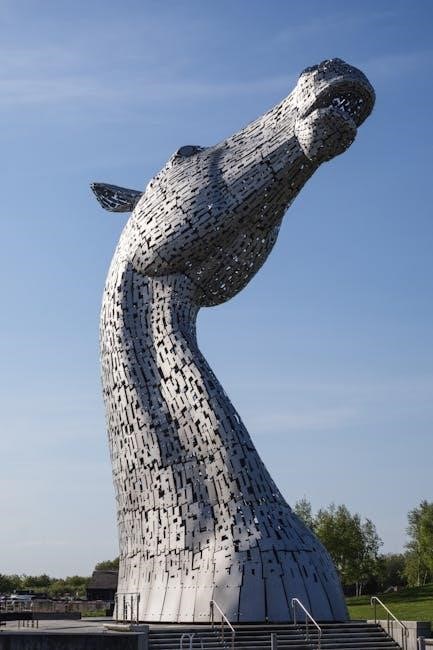
Visually‚ kelpies have appeared in paintings and illustrations‚ often depicted as magnificent‚ yet terrifying‚ water horses. More recently‚ the monumental Kelpie sculptures at The Helix Park in Falkirk‚ Scotland‚ designed by Andy Scott‚ represent a powerful and modern artistic interpretation. These 30-meter-high steel horses symbolize both the industrial heritage of the area and the mythical creature itself‚ attracting visitors from around the globe and cementing the kelpie’s iconic status.
The enduring appeal of the kelpie lies in its ability to embody both beauty and danger‚ making it a compelling subject for creative exploration.
The Helix Park Kelpie Sculptures
Dominating the Scottish landscape‚ the Kelpie sculptures at The Helix Park in Falkirk are a breathtaking tribute to the mythical water spirit. Completed in October 2013‚ these colossal 30-meter (100 ft) steel structures‚ designed by artist Andy Scott‚ have quickly become iconic landmarks.
The sculptures aren’t merely artistic representations; they are deeply rooted in the area’s history. Falkirk was once a hub of horse-powered industry‚ and the Kelpies acknowledge this heritage. However‚ they simultaneously celebrate the legendary creature of Scottish folklore‚ bringing the ancient myth to life on a grand scale.
Constructed from over 300 tonnes of steel‚ the Kelpies appear to emerge from the earth‚ their powerful forms reflecting in the surrounding canal. At night‚ dramatic lighting transforms them‚ enhancing their ethereal and somewhat menacing presence. The park itself offers walking and cycling trails‚ allowing visitors to fully appreciate the sculptures from various perspectives.
These magnificent structures serve as a powerful symbol of Scotland’s cultural identity and a testament to the enduring allure of the kelpie legend.
Kelpies in Contemporary Media
The kelpie’s enduring mystique continues to inspire creators across various modern media platforms. From literature to video games‚ the shape-shifting water spirit finds new life‚ captivating audiences with its dangerous allure and symbolic weight.
In recent fantasy novels‚ kelpies often appear as complex characters‚ moving beyond simple monstrous depictions. They are frequently portrayed with ambiguous morality‚ reflecting the creature’s dual nature – beautiful yet deadly. This nuanced approach adds depth to their presence within these narratives.
Video games‚ particularly those with Celtic or Scottish themes‚ frequently incorporate kelpies as challenging enemies or intriguing quest givers. Their shape-shifting abilities provide unique gameplay mechanics and storytelling opportunities. Furthermore‚ the kelpie’s image appears in artwork‚ illustrations‚ and even music‚ demonstrating its broad cultural impact.
This continued representation ensures the kelpie legend remains relevant‚ introducing the creature to new generations and solidifying its place in contemporary folklore.
Cultural Significance Today
The kelpie transcends its origins as a cautionary tale‚ holding significant cultural weight in modern Scotland and beyond. It represents a powerful connection to the landscape‚ embodying both the beauty and inherent dangers of Scotland’s lochs and rivers.
The magnificent Helix Park Kelpie sculptures‚ standing at 30 meters tall‚ are a testament to this enduring significance. These iconic structures serve as a major tourist attraction‚ celebrating the creature and its folklore while revitalizing the local area. They’ve become symbols of Scottish identity and artistic innovation.
Beyond the sculptures‚ the kelpie continues to inspire local artists‚ writers‚ and musicians‚ fostering a sense of national pride and cultural heritage. Its image is frequently used in branding and tourism materials‚ attracting visitors interested in Scotland’s rich mythology.
The kelpie’s story serves as a reminder of the power of nature and the importance of respecting its boundaries‚ resonating with contemporary environmental concerns.
Kelpie Habitats & Locations
Kelpies favor lochs and rivers across Scotland‚ with almost every sizeable body of water linked to a kelpie story. Lochs are their primary domains‚ embodying danger.
Lochs and Rivers: Preferred Kelpie Domains
Lochs and rivers represent the quintessential habitats for kelpies‚ deeply interwoven with their mythological existence. These bodies of water aren’t merely backdrops; they are integral to the kelpie’s nature and predatory behaviors. The dark‚ often treacherous depths of lochs provide ideal cover for these shape-shifting spirits‚ allowing them to lure unsuspecting victims.
Historically‚ Scottish lochs were vital for transportation and sustenance‚ but also presented inherent dangers – strong currents‚ hidden depths‚ and unpredictable weather. Kelpie legends likely served as cautionary tales‚ warning communities about the risks associated with these waterways. Rivers‚ with their flowing currents and often secluded banks‚ also offered suitable hunting grounds for the kelpie.
The association with water isn’t accidental. It reflects the kelpie’s elemental connection to the natural world and its ability to manipulate its form within aquatic environments. These domains aren’t simply places where kelpies live‚ but rather extensions of their very being‚ embodying both beauty and peril.
Specific Locations with Kelpie Legends
Scotland boasts numerous locations steeped in kelpie lore‚ each with its own unique tales and local variations. While almost every sizeable body of water has an associated story‚ some places are particularly renowned for their kelpie sightings and legends. Loch Lomond‚ one of Scotland’s largest lochs‚ frequently appears in kelpie narratives‚ its vastness providing ample space for the creature to roam.
Loch Morar‚ known for its depth and mysterious atmosphere‚ is another hotspot for kelpie stories. The River Spey‚ a major river in the Scottish Highlands‚ also features prominently in local folklore. Even smaller lochans and rivers throughout the country have their own kelpie associations‚ passed down through generations.
These locations aren’t just geographically significant; they are culturally important‚ serving as focal points for storytelling and preserving the kelpie’s legacy. Visiting these sites allows one to connect with the rich history and enduring mystery surrounding this captivating creature.
The Connection to Dangerous Waters
The kelpie’s association with lochs‚ rivers‚ and streams isn’t accidental; it’s deeply rooted in the practical realities of life in Scotland. These bodies of water often presented genuine dangers – strong currents‚ hidden depths‚ and unpredictable conditions. Kelpie tales served as cautionary warnings‚ particularly for children‚ to respect the power of nature and avoid risky behavior near water.
The creature’s predatory nature‚ luring victims to a watery grave‚ mirrored the real threat of drowning. Stories emphasized the kelpie’s deceptive beauty‚ often appearing as a magnificent horse‚ to highlight the dangers of trusting appearances. This connection to perilous waters transformed the kelpie into a symbol of both fascination and fear.
Essentially‚ the folklore functioned as a form of environmental education‚ subtly imparting vital safety lessons through captivating narratives. The kelpie‚ therefore‚ became intrinsically linked to the inherent risks of Scotland’s waterways.
Geographical Distribution of Kelpie Lore
While most prominently featured in Scottish folklore‚ tales of kelpies – or creatures remarkably similar – extend far beyond Scotland’s borders; Legends of shape-shifting water spirits appear across Europe‚ including in Germanic folklore as the “Nixie‚” and even in Central American and Australian mythologies with comparable entities.
Within Scotland‚ almost every sizeable body of water boasts its own unique kelpie story‚ demonstrating a widespread belief in the creature’s presence. However‚ the lore is particularly concentrated around specific lochs and rivers known for their treacherous conditions. This suggests a localized adaptation of the myth‚ reflecting regional hazards.
The broader distribution indicates a shared human fascination with‚ and fear of‚ the unknown dangers lurking beneath the surface of water‚ manifesting in diverse cultural expressions of similar mythical beings.